Dose-dependent inhibition of gastric injury by hydrogen in alkaline electrolyzed drinking water
研究性质说明:本研究采用阿司匹林-HCl诱导的大鼠胃损伤模型,属于动物实验,并非人体临床试验。文中结果不能直接等同于人体使用结果,也不构成医疗建议或具体产品功效证明。
原论文:Xue J, Shang G, Tanaka Y, et al. Dose-dependent inhibition of gastric injury by hydrogen in alkaline electrolyzed drinking water. BMC Complementary and Alternative Medicine. 2014;14:81. DOI: 10.1186/1472-6882-14-81;PMCID: PMC3944674;开放许可:CC BY 2.0。
资料说明
本文整理自公开发表的科研论文。为方便中文读者查阅,本文件按照论文原有结构,以“英文原文 + 中文翻译”的方式呈现。中文翻译尽可能保持原论文的研究条件、数据和结论语气,不进行产品化延伸或额外功效解读。
特别说明:本研究采用阿司匹林-HCl诱导的大鼠胃损伤模型,属于动物实验,并非人体临床试验。
摘要 Abstract
研究背景 Background
Hydrogen has been reported to relieve damage in many disease models, and is a potential additive in drinking water to provide protective effects for patients as several clinical studies revealed. However, the absence of a dose-response relationship in the application of hydrogen is puzzling. We attempted to identify the dose-response relationship of hydrogen in alkaline electrolyzed drinking water through the aspirin induced gastric injury model.
已有研究报道,氢在多种疾病模型中表现出减轻损伤的作用,一些临床研究也提示,将氢加入饮用水可能具有一定的保护作用。然而,在氢的应用研究中缺乏明确的剂量-反应关系,这一点令人困惑。本研究尝试通过阿司匹林诱导的胃损伤模型,探讨碱性电解饮用水中氢的剂量-反应关系。
研究方法 Methods
In this study, hydrogen-rich alkaline water was obtained by adding H2 to electrolyzed water at one atmosphere pressure. After 2 weeks of drinking, we detected the gastric mucosal damage together with MPO, MDA and 8-OHdG in rat aspirin induced gastric injury model.
本研究在一个大气压条件下向电解水中加入H2,制备富氢碱性水。实验动物饮用2周后,在阿司匹林诱导的大鼠胃损伤模型中检测胃黏膜损伤情况,并检测MPO、MDA和8-OHdG等指标。
研究结果 Results
Hydrogen-dose dependent inhibition was observed in stomach mucosal. Under pH 8.5, 0.07, 0.22 and 0.84 ppm hydrogen exhibited a high correlation with inhibitory effects showed by erosion area, MPO activity and MDA content in the stomach. Gastric histology also demonstrated the inhibition of damage by hydrogen-rich alkaline water. However, 8-OHdG level in serum did not have significant hydrogen-dose dependent effect. pH 9.5 showed higher but not significant inhibitory response compared with pH 8.5.
研究在胃黏膜中观察到了与氢剂量相关的抑制作用。在pH 8.5条件下,0.07、0.22和0.84 ppm三个氢浓度,与胃部糜烂面积、MPO活性以及MDA含量所反映的抑制作用呈较高相关性。胃组织学检查同样显示,富氢碱性水对相关损伤具有抑制作用。然而,血清8-OHdG水平没有表现出显著的氢剂量依赖性效应。与pH 8.5相比,pH 9.5表现出更高的抑制趋势,但差异未达到统计学显著水平。
研究结论 Conclusions
Hydrogen is effective in relieving the gastric injury induced by aspirin-HCl, and the inhibitory effect is dose-dependent. The reason behind this may be that hydrogen-rich water directly interacted with the target tissue, while the hydrogen concentration in blood was buffered by liver glycogen, evoking a suppressed dose-response effect. Drinking hydrogen-rich water may protect healthy individuals from gastric damage caused by oxidative stress.
作者认为,在该实验模型中,氢能够减轻阿司匹林-HCl诱导的胃损伤,并且这种抑制作用呈剂量依赖性。其原因可能在于富氢水能够直接与目标组织接触,而血液中的氢浓度可能受到肝糖原的缓冲,从而削弱剂量-反应效应。作者提出,饮用富氢水可能对氧化应激引起的胃部损伤具有一定保护作用。
Keywords: Alkaline electrolyzed water, Dose-response, Gastric injury, Hydrogen, Oxidative stress
关键词:碱性电解水、剂量-反应、胃损伤、氢、氧化应激。
研究背景 Background
Endogenous hydrogen is produced by colonic fermentation in the gastrointestinal tract of rodents [1], humans [2], and even insects [3,4]. Hydrogen rapidly penetrates tissues and blood vessels by free diffusion, and then is transported to all organs. The average H2 concentration on the mucus layer of the mouse stomach is 43 μM [5]. While in liver, spleen and small intestine, the concentrations are 53, 48, and 168 μM respectively [6].
啮齿动物[1]、人类[2],甚至昆虫[3,4]的胃肠道中,都可以通过结肠发酵产生内源性氢。氢能够通过自由扩散快速穿透组织和血管,随后被运输至各个器官。小鼠胃黏液层中的平均H2浓度为43 μM[5];肝脏、脾脏和小肠中的浓度则分别为53、48和168 μM[6]。
The physiological role of H2 is not yet clear. Ohsawa et al. [7] found that hydrogen has an antioxidant and anti-apoptotic role which protects the brain against ischemia-reperfusion injury and stroke by selectively neutralizing hydroxyl radicals and peroxynitrite. These results therefore suggest that H2 can be applied therapeutically as a medical gas.
H2的生理作用目前尚未完全明确。Ohsawa等人[7]发现,氢具有抗氧化和抗凋亡作用,通过选择性中和羟自由基和过氧亚硝酸根,在缺血再灌注损伤和卒中相关实验中对脑组织产生保护作用。因此,这些研究结果提示H2可能具有作为医用气体进行治疗应用的潜力。
Moreover, clinical application of H2 has shown many additional advantages. Firstly, H2 does not react with superoxide anion radical and hydrogen peroxide, which have important physiological roles [7]. Secondly, it can be easily delivered via gas, drinking water, and intravenous infusion; and its favorable distribution features allow it to reach many organs that other drugs may not reach, granting it access into the mitochondria, nucleus, and across the blood-brain barrier.
此外,作者指出,H2的临床应用还表现出一些其他特点。首先,H2不会与具有重要生理作用的超氧阴离子自由基和过氧化氢发生反应[7]。其次,氢可以通过气体吸入、饮用水以及静脉输注等方式给予;其分布特性使其能够到达一些其他药物可能较难到达的部位,包括进入线粒体、细胞核以及穿过血脑屏障。
And finally, H2 elicits little side effects. Its application in Hydreliox, an exotic breathing mixture of 49% hydrogen, 50% helium and 1% oxygen, used in deep diving, demonstrates its safety for human use [8,9]. Likewise, six clinical trials, among which the longest treatment was 6 months, also showed no detectable adverse effects from hydrogen in drinking water, hemodialysis or intravenous infusion [10-16].
最后,作者指出H2表现出的副作用较少。Hydreliox是一种用于深海潜水的特殊呼吸混合气体,其中含49%氢、50%氦和1%氧,其应用经验被作者作为氢在人类使用安全性方面的参考[8,9]。此外,论文引用的6项临床试验中,最长干预时间达到6个月,在富氢饮用水、血液透析或静脉输注等氢应用方式中,均未检测到明显不良反应[10-16]。
In the last five years, the evident protective effects of H2 have been documented for 63 disease models and human diseases [17], including cerebral infarction, hepatic and myocardial injury, Parkinson disease, metabolic syndrome, inflammation and allergy, organ transplantation, and so forth [18-20].
论文作者指出,在此前五年中,已有文献在63种疾病模型及人体疾病研究中记录了H2相关的保护性效应[17],涉及脑梗死、肝脏及心肌损伤、帕金森病、代谢综合征、炎症与过敏、器官移植等研究方向[18-20]。
However, the possible effects of hydrogen on gastric injury are yet to be studied, and furthermore, the absence of a dose-response effect in the use of hydrogen as a therapeutic molecule in previous studies is surprising for several reasons.
然而,当时关于氢对胃损伤可能产生的影响仍缺乏研究。此外,在将氢作为治疗性分子开展的既往研究中,缺少明显剂量-反应关系的现象也令人关注。
First, the amount of hydrogen taken up by drinking water is much less than by inhaling 1-4% hydrogen gas, however hydrogen-rich water showed similar or even better beneficial effects than hydrogen gas [10,21]. Second, the amount of endogenous hydrogen generated by intestinal bacteria (about 1 liter/day) is much more than the amount from drinking hydrogen-rich water (usually less than 50 milliliter/day) [18,21]. Third, drinking hydrogen-rich water in different concentrations, injecting different quantities of hydrogen saline, or inhaling different amounts of hydrogen gas did not show a discernible difference in effects [22-24].
首先,通过饮用水摄入的氢量明显少于吸入1%-4%氢气所摄入的氢量,但一些研究中,富氢水所表现出的相关作用却与氢气吸入相近,甚至更明显[10,21]。其次,由肠道细菌产生的内源性氢约为1升/天,明显高于通过饮用富氢水摄入的氢量,后者通常低于50毫升/天[18,21]。第三,在既往研究中,无论饮用不同浓度的富氢水、注射不同剂量的富氢盐水,还是吸入不同剂量的氢气,所观察到的作用并没有表现出容易区分的明显差异[22-24]。
In this study, alkaline hydrogen-rich water was generated through electrolysis. Mixed hydrogen and nitrogen gas (2:8 and 7:3) was used to adjust the hydrogen concentration in water to get three different hydrogen concentrations (0.07 ppm, 0.22 ppm, 0.84 ppm).
本研究通过电解方式制备富氢碱性水,并使用氢气和氮气的混合气体(比例分别为2:8和7:3)调节水中的氢浓度,从而获得三个不同的氢浓度:0.07 ppm、0.22 ppm和0.84 ppm。
We did not perform neutralization as most studies did in the past [25-28], since both high pH and hydrogen can relieve aspirin injury in the stomach. Electrolyzed alkaline water itself can inhibit aspirin-induced gastric injury [29], and additionally, the alkaline load in water may prevent an increased urinary excretion of minerals like calcium and magnesium, caused by the body’s acidity [30].
与此前许多研究不同[25-28],本研究没有对电解水进行中和处理,因为较高pH值和氢本身都可能影响阿司匹林造成的胃损伤。既往研究提出,电解碱性水本身可能对阿司匹林诱导的胃损伤产生抑制作用[29]。此外,作者引用研究指出,水中的碱性负荷可能有助于减少因机体酸性状态导致的钙、镁等矿物质尿排泄增加[30]。
Dose-dependent inhibitory effects of hydrogen were observed in the stomach, but were not apparent in serum. The results suggest a dose-response effect exists when hydrogen interacts directly with the tissue, but a high dose of hydrogen may not increase the beneficial effects in target organs via blood transportation.
研究在胃组织中观察到了与氢剂量相关的抑制作用,但这种剂量关系在血清指标中并不明显。作者认为,当氢直接与目标组织接触时,可能存在剂量-反应关系;但当氢通过血液运输到其他目标器官时,增加氢剂量未必会同步增加相关作用。
研究方法 Methods
伦理声明 Ethics statement
Animal maintenance and experimental procedures were carried out in strict accordance with the Institutional Animal Care and Use Committee (IACUC) of Tsinghua University, which is a branch of Beijing Animal Care and Use Committee. All experiments were reviewed and approved by IACUC (permit number 12-LY-02), and all efforts were made to minimize suffering.
动物饲养及实验操作严格按照清华大学实验动物管理与使用委员会(IACUC)的相关要求进行。所有实验均经过IACUC审核批准,批准编号为12-LY-02,并在实验过程中尽可能减少动物痛苦。
试剂 Reagents
All solutions were prepared prior to use. Electrolyzed alkaline water was obtained from an alkaline ion water electrolyzer (TK7505, Panasonic, Japan), a commercial electrolyzer from Japan. The 8-OHdG and HEL ELISA kit were purchased from the Japan Institute for the Control of Aging (JaICA). Thiobarbituric acid was obtained from J&K Scientific Ltd; Hexadecyl trimethyl ammonium Bromide was acquired from Beijing River Dawn Biotechnology Co.,Ltd; and 3,3′,5,5′,-tetramethylbenzidine was obtained from Amresco, USA.
所有溶液均在使用前制备。电解碱性水由日本松下生产的商业碱性离子水电解器TK7505制备。8-OHdG和HEL ELISA检测试剂盒购自日本相关研究机构。硫代巴比妥酸购自J&K Scientific Ltd;十六烷基三甲基溴化铵购自北京相关生物技术公司;3,3′,5,5′-四甲基联苯胺购自美国Amresco公司。
动物与胃损伤模型 Animals and gastric injury model
Male Sprague Dawley rats weighting 150-170 g were purchased from Beijing Vital River Laboratories, and housed at the Center of Biomedical Analysis, Tsinghua University. The experiment started when the rats reached 200-220 g in weight.
研究使用体重150-170克的雄性Sprague Dawley大鼠,购自北京维通利华实验动物技术有限公司,并饲养于清华大学生物医学分析中心。当大鼠体重达到200-220克时开始实验。
Alkaline water with hydrogen was prepared every evening from facility tap water (pH 6.8, conductivity 40 μs/cm) and filled in aluminum bags. Two pH values, 8.5 and 9.5, were selected in this study. pH 8.5 and 9.5 are the up limits of drinking water standard in China and the standard for electrolyzer in Japan (please see Japan Industrial Standard, JIS T 2004:2005.), respectively.
每天晚上使用实验设施自来水制备含氢碱性水。原水pH值为6.8,电导率为40 μs/cm,制备后装入铝袋。本研究选择pH 8.5和pH 9.5两种水样。作者说明,pH 8.5和pH 9.5分别对应当时中国饮用水标准的上限以及日本电解水设备相关标准中的数值要求(参见日本工业标准JIS T 2004:2005)。
Alkaline water with pH 8.5 and 9.5 contained 0.07 ppm and 0.22 ppm hydrogen respectively during electrolysis. Additionally, more hydrogen was dissolved in water with mixed hydrogen and nitrogen gas (2:8 and 7:3), which was filled into the aluminum bags at one atmospheric pressure, in order to yield 0.22 ppm and 0.84 ppm hydrogen water.
电解过程中,pH 8.5和pH 9.5的碱性水中分别含有约0.07 ppm和0.22 ppm氢。此外,研究人员使用氢气和氮气混合气体(比例分别为2:8和7:3),在一个大气压条件下向铝袋中的水进一步溶入氢气,从而制备氢浓度分别为0.22 ppm和0.84 ppm的水样。
Using nitrogen in the gas mixtures was a consideration for safety. Furthermore, the atmosphere contains 78% of nitrogen, which makes it unlikely a functional gas in our study. The concentration of hydrogen in water was measured by a portable dissolved hydrogen meter DH-35A (DKK-TOA Corporation, Japan). The hydrogen concentration was sustained for 24 h without detectable change.
混合气体中使用氮气主要出于安全考虑。此外,大气中约78%为氮气,因此研究人员认为氮气不太可能成为本研究中的功能性气体。水中的氢浓度使用日本DKK-TOA公司的DH-35A便携式溶解氢测定仪检测。检测显示,水中氢浓度可维持24小时而没有检测到明显变化。
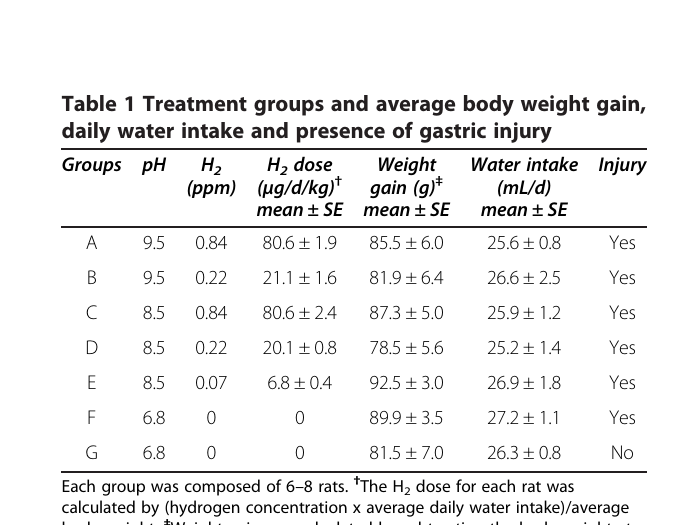
Each animal was kept in a separate cage, and had free access to water at night from 6 pm to 9 am. The water intake and body weight were recorded daily for each rat. All rats were randomly distributed into 7 groups of 6 to 8 rats each, and given different drinking water (Table 1).
每只动物单独饲养在一个笼中,并在每天18:00至次日9:00之间自由饮水。研究人员每天记录每只大鼠的饮水量和体重。所有大鼠被随机分为7组,每组6-8只,并分别饮用不同水样(见表1)。
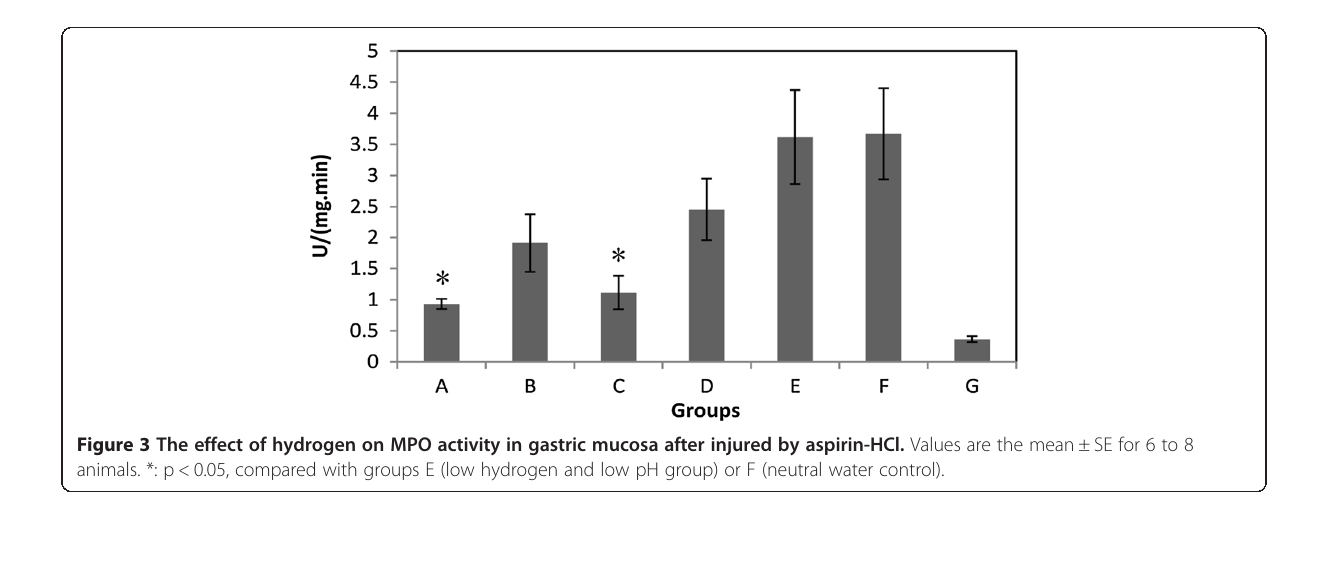
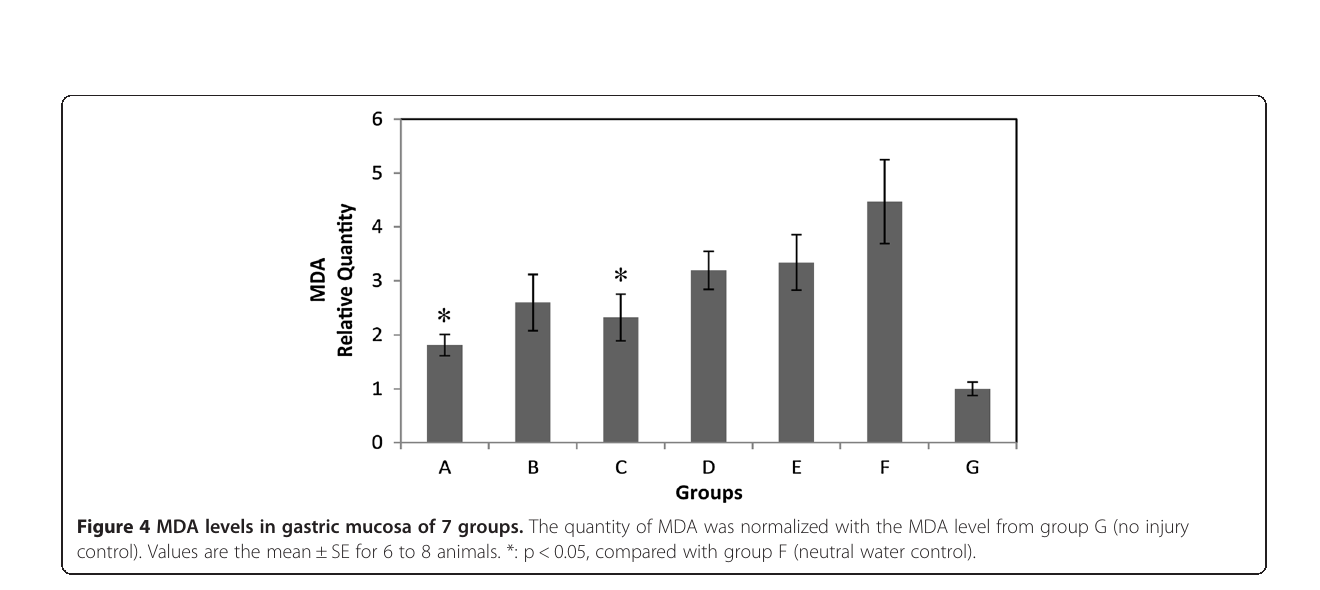
Group A: pH 9.5, 0.84 ppm H2, B: pH 9.5, 0.22 ppm H2, C: pH 8.5, 0.84 ppm H2, D: pH 8.5, 0.22 ppm H2, E: pH 8.5, 0.07 ppm H2, F: pH 6.8, 0 ppm H2 (facility tap water), G: pH 6.8, 0 ppm H2 (facility tap water).
A组:pH 9.5,H2 0.84 ppm;B组:pH 9.5,H2 0.22 ppm;C组:pH 8.5,H2 0.84 ppm;D组:pH 8.5,H2 0.22 ppm;E组:pH 8.5,H2 0.07 ppm;F组:pH 6.8,H2 0 ppm;G组:pH 6.8,H2 0 ppm。
After two weeks of treatment, the animals were starved for 18 hours with hydrogen-rich water still available. The drinking water was removed one hour prior to the rats being dosed with 200 mg/kg of aspirin and 0.15 N HCl (8 mL/kg) together with 1% carboxymethyl cellulose sodium by intubation. Group G was starved, but not treated with aspirin-HCl. After three hours, animals were anesthetized by urethane and blood was taken from the abdominal aorta, following which they were sacrificed by exsanguination.
连续干预两周后,对动物禁食18小时,但期间仍可以继续饮用相应水样。在给予实验处理前1小时撤去饮用水。随后通过灌胃方式给予大鼠200 mg/kg阿司匹林和0.15 N盐酸(8 mL/kg),并加入1%羧甲基纤维素钠。G组同样接受禁食处理,但不接受阿司匹林-HCl处理。3小时后,对动物进行乌拉坦麻醉,从腹主动脉采血,随后通过失血方式处死实验动物。
胃黏膜损伤评价 Evaluation of gastric mucosal lesions
After animals were euthanized, each stomach was removed, opened and washed with PBS. The eroded area on the surface of the hind stomach (gastric score) was measured under a dissecting microscope by a person without experiencing the dosing procedure. For histological evaluation, a piece of organ wall at the bottom region of the stomach was cut, paraffin embedded, Periodic Acid-Schiff (PAS) stained, haematoxylin counter-stained, and examined under light microscope. The gastric mucosa was scraped off from the rest stomach with a glass slide, and stored at -80°C.
动物处死后,取出胃组织,剖开并使用PBS清洗。由一名不了解实验给药过程的人员,在解剖显微镜下测量胃后部表面的糜烂区域,并将其作为胃损伤评分指标。进行组织学评价时,从胃底部区域切取胃壁组织,经石蜡包埋、PAS染色以及苏木精复染后,在光学显微镜下观察。剩余胃组织中的胃黏膜使用载玻片刮取,并在-80°C条件下保存。
髓过氧化物酶(MPO)活性
Each gastric sample was ground by Teflon Potter-Elvehjem homogenizer in 500 μl 10 mM potassium phosphate buffer (pH 7.8) containing 30 mM KCl, 1% Phenylmethanesulfonyl fluoride and 5 mM EDTA, to get a homogenate. The homogenate was then centrifuged and the supernatant was used to detect the protein concentration. The pellet was re-homogenized in 500 μl of 0.05 M potassium phosphate buffer (pH 5.4) containing 0.5% hexadecyl trimethyl ammonium bromide, and then centrifuged. The 100 μl supernatant was then mixed with the same volume of 0.05 M potassium phosphate buffer (pH 5.4) containing 15 mM 3,3′,5,5′,-tetramethylbenzidine and 2% H2O2. MPO activity was detected by microplate reader at 630 nm every 15 seconds for 5 minutes, and it was expressed as units per mg protein.
每份胃组织样本均置于500 μl、10 mM磷酸钾缓冲液中进行匀浆,该缓冲液pH为7.8,并含30 mM KCl、1%苯甲基磺酰氟和5 mM EDTA。匀浆液离心后使用上清液检测蛋白质浓度;沉淀再在含0.5%十六烷基三甲基溴化铵的0.05 M磷酸钾缓冲液(pH 5.4)中重新匀浆并离心。取100 μl上清液与等体积含15 mM 3,3′,5,5′-四甲基联苯胺及2% H2O2的磷酸钾缓冲液混合。使用酶标仪在630 nm波长下每15秒检测一次,共5分钟,并以每毫克蛋白的活性单位表示MPO活性。
丙二醛(MDA)相对浓度
The MDA generated in the gastric mucosa, as a product of lipid peroxidation, was detected by thiobarbituric acid reaction. Gastric mucosa was homogenized and ultrasonicated in 500 μl of 0.15 M KCl at 0°C. Protein was denatured by adding SDS, acetic acid and newly prepared thiobarbituric acid solution. The mixture was placed in a boiling water bath for 45 min, then cooled and centrifuged. The supernatant was used to determine the relative MDA concentration by microplate reader at 532 nm.
胃黏膜中产生的MDA是脂质过氧化产物,本研究采用硫代巴比妥酸反应进行检测。胃黏膜在0°C条件下于500 μl、0.15 M KCl溶液中匀浆并超声处理。加入SDS、乙酸和新配制的硫代巴比妥酸溶液使蛋白质变性。混合物置于沸水浴45分钟,随后冷却并离心,使用酶标仪在532 nm波长下检测上清液中的相对MDA浓度。
血清8-OHdG检测
8-OHdG concentration is a biomarker of DNA damage and was detected by an ELISA kit from the Japan Institute for the Control of Aging. The test was conducted following the manufacturer’s instructions.
8-OHdG浓度是一种用于反映DNA损伤的生物标志物。本研究使用日本相关研究机构提供的ELISA试剂盒进行检测,具体操作按照制造商说明进行。
己酰赖氨酸(HEL)加合物浓度
HEL is also a biomarker for oxidative stress. The HEL concentrations in serum were determined by an ELISA kit from the Japan Institute for the Control of Aging. The test was performed following the manufacturer’s instructions.
HEL同样是一种氧化应激生物标志物。血清中的HEL浓度使用ELISA试剂盒检测,并按照制造商说明完成实验。
统计分析 Statistical analysis
Results were presented as the mean ± standard error (SE), and the data were compared by Analysis of Variance (ANOVA) one way test by PASW Statistics 18. The differences were considered significant when the P-value was less than 0.05 by Tukey test.
研究结果以平均值±标准误(SE)表示,并使用PASW Statistics 18软件进行单因素方差分析(ANOVA)。采用Tukey检验时,当P值小于0.05,则认为组间差异具有统计学显著性。
研究结果 Results
饮水量与胃损伤
As expected, the average volume of water consumption and the average weight gain per rat were similar across treatment groups, as shown in Table 1. These results imply that both the pH (8.5 and 9.5) and hydrogen concentration in drinking water (0.84 ppm, 0.22 ppm, and 0.07 ppm) did not affect the animals’ desire to consume water, and therefore the rats grew at the same rate. Thus, the gastric injury should not have been affected by potential differences in drinking behavior.
如预期所示,各处理组大鼠平均饮水量以及平均体重增长情况相近。这些结果说明,饮用水的pH值(8.5和9.5)以及其中的氢浓度(0.84、0.22和0.07 ppm)并未影响动物的饮水意愿,因此各组大鼠生长速度基本一致。由此可认为,胃损伤结果没有受到不同饮水行为所带来的潜在影响。
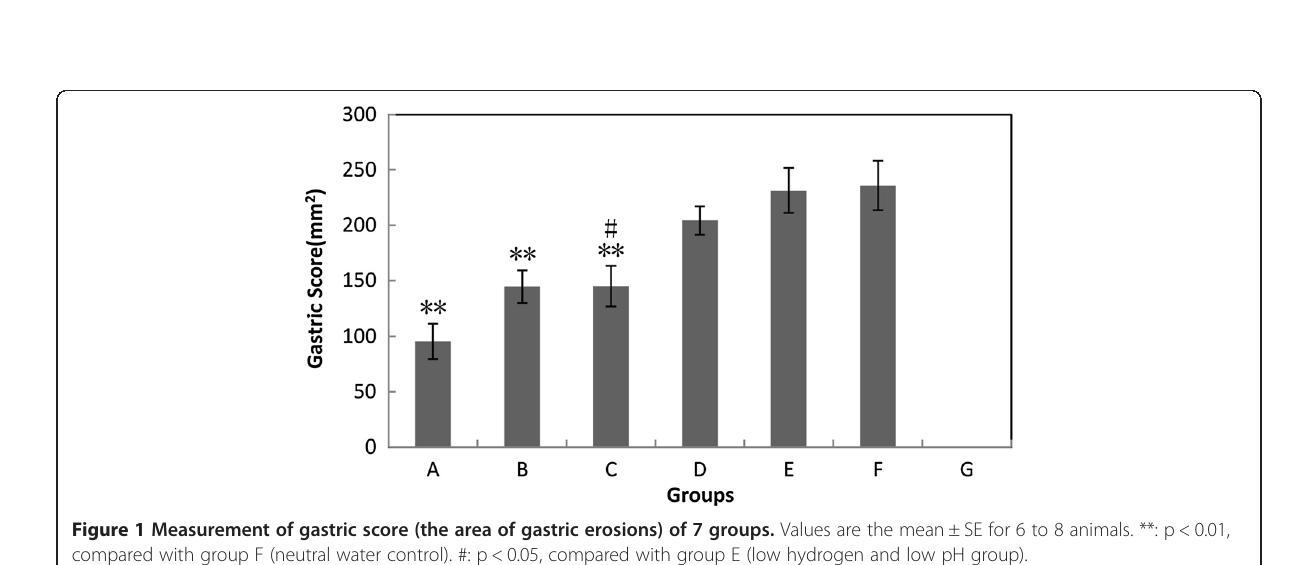
Anatomical results showed that groups with high pH 9.5, high hydrogen concentration 0.84 ppm, or both, had significant inhibition of gastric damage compared with the group drinking facility tap water (group F). And at the same pH, significant hydrogen-dose dependent inhibition was seen within groups C, D, and E. If the inhibitory effects and the hydrogen concentrations were compared, high positive correlation was found. At the same hydrogen concentration, high pH also provided more inhibition, though the effects were not statistically significant.
解剖结果显示,与饮用实验设施自来水的F组相比,pH 9.5组、氢浓度0.84 ppm组,或者同时具有较高pH值和较高氢浓度的实验组,其胃损伤程度均受到明显抑制。在相同pH值条件下,C、D和E组之间观察到了明显的氢剂量依赖性抑制作用。将抑制作用与氢浓度进行比较时,研究发现二者之间存在较高的正相关性。在氢浓度相同的情况下,较高pH值也表现出更强的抑制趋势,但差异没有达到统计学显著水平。
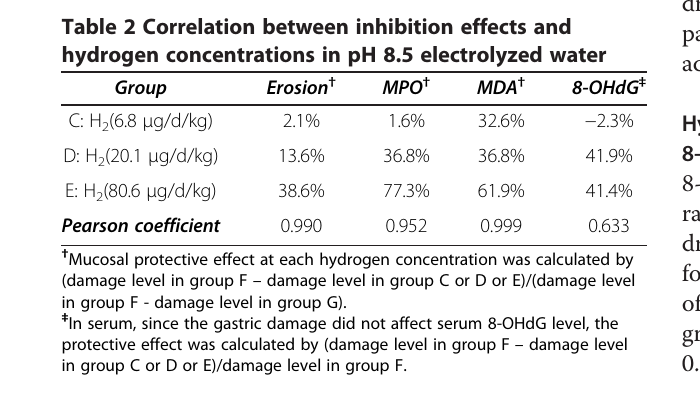
Inhibitory effects were also evidenced through histological staining. Different regions of the stomach had different damage levels, which were not consistent within one dose group. Samples from group G had intact mucosal layer. Group F showed detached cell debris and defective mucus production at many regions. Samples from groups A and C had relatively intact mucus layer and most mucus secretion cells were still functional compared with group F. Group B, D and E had middle levels of injury, but the phenotype cannot be quantified.
组织学染色结果同样显示出相关抑制作用。胃的不同区域出现了不同程度的损伤,即使在同一个剂量组内也并不完全一致。G组样本的胃黏膜层保持完整;F组在多个区域的黏膜表面存在脱落的细胞碎片,并出现黏液生成缺陷。与F组相比,A组和C组样本中的黏液层相对完整,大多数黏液分泌细胞仍保持功能。B、D和E组的损伤程度处于中间水平,但这种组织学表型难以进行定量分析。
富氢电解水与胃黏膜炎症、氧化应激指标
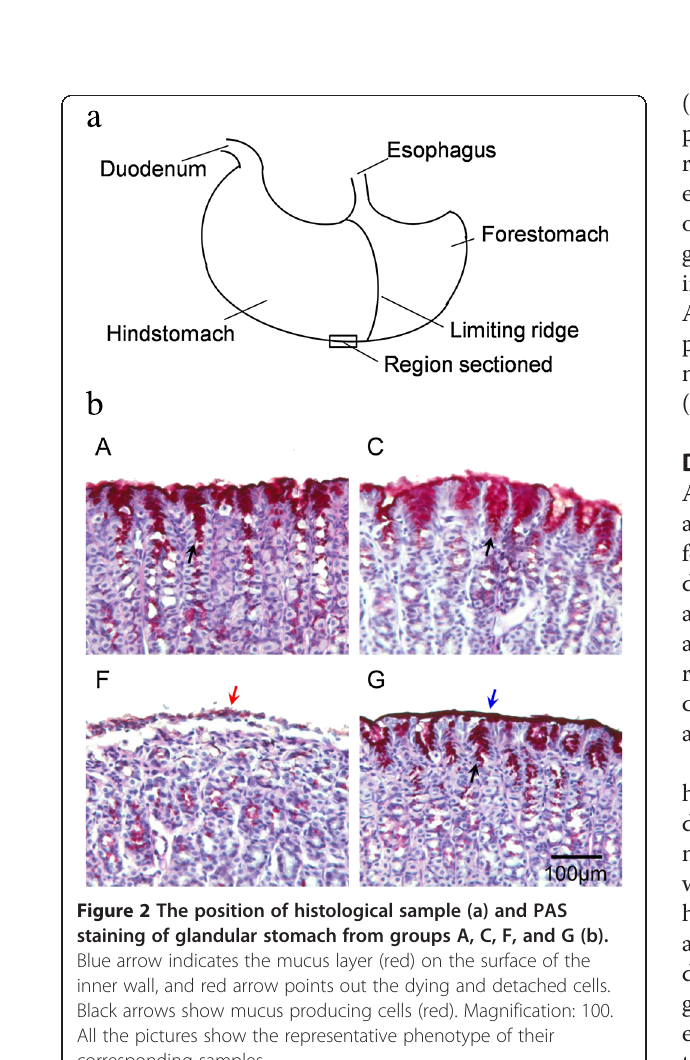
Myeloperoxidase (MPO) activity from the mucosa was detected and normalized with protein concentration for each sample. The activities were inhibited by pH 9.5 and 8.5 electrolyzed water in a hydrogen dose-dependent manner compared with group F. The inhibition levels were well correlated with hydrogen dose.
研究检测了胃黏膜中的MPO活性,并根据每个样本的蛋白质浓度进行标准化处理。与F组相比,饮用pH 9.5和pH 8.5电解水的实验组,其MPO活性受到抑制,并表现出氢剂量依赖性,抑制程度与氢剂量之间具有较好的相关性。
Malondialdehyde (MDA) is generated from reactive oxygen species (ROS), and as such, it is assayed in-vivo as a biomarker of oxidative stress. The mucosal MDA content in hydrogen-rich electrolyzed water treated groups showed significant reduction compared with the group drinking unaltered water. And the inhibition pattern is similar to the results of gastric score and MPO activity.
丙二醛(MDA)与活性氧(ROS)引发的脂质过氧化过程有关,因此在体内研究中常作为氧化应激的生物标志物。与饮用未经处理水的实验组相比,接受富氢电解水处理的实验组胃黏膜MDA含量明显降低,其变化模式与胃损伤评分及MPO活性的结果基本相似。
富氢电解水与血清8-OHdG水平
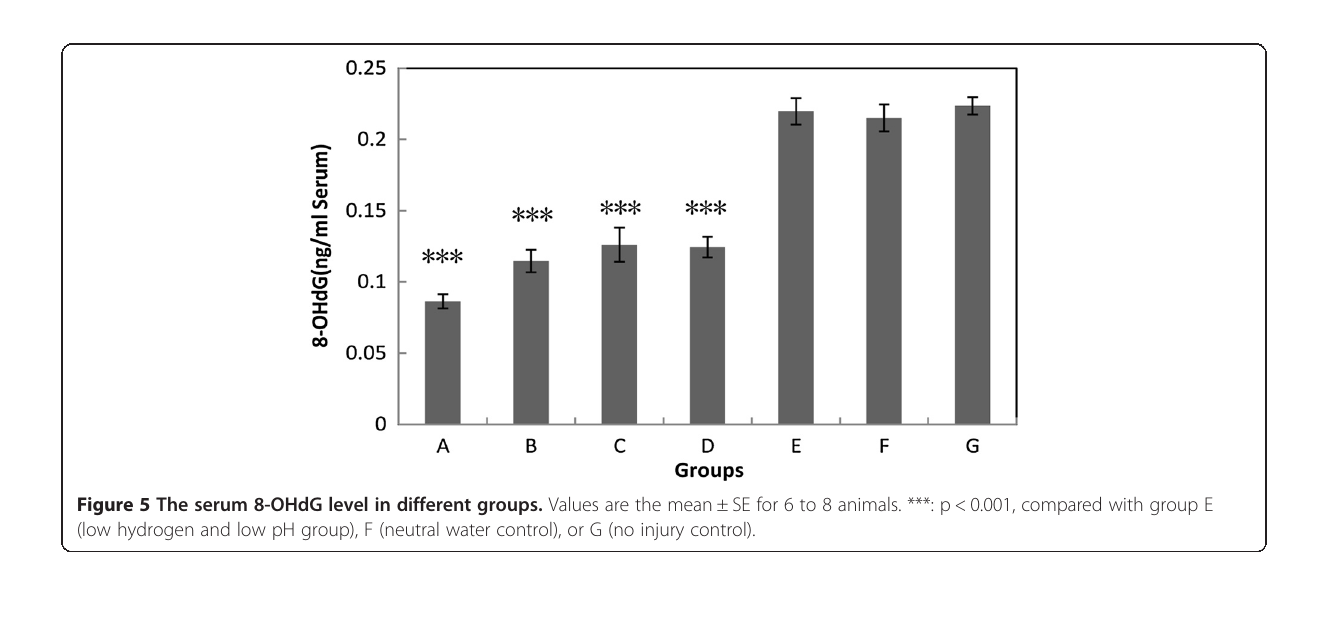
8-OHdG is one of the predominant forms of free-radical-induced DNA damage in nuclei and mitochondria, and therefore has been widely used as a biomarker for oxidative stress and carcinogenesis. The serum levels of 8-OHdG were significantly reduced in high hydrogen groups (hydrogen concentration larger than or equal to 0.22 ppm) compared with the tap water control group F.
8-OHdG是自由基导致细胞核和线粒体DNA损伤的常见形式之一,因此被广泛作为氧化应激及相关研究中的生物标志物。与自来水对照F组相比,较高氢浓度组(氢浓度≥0.22 ppm)的血清8-OHdG水平明显降低。
However, opposed to the other testing endpoints, reduction levels and hydrogen doses were not correlated in pH 8.5 groups, suggesting that a dose-response effect was not present for serum 8-OHdG. Another oxidative stress marker, HEL, was also tested in serum, but the results did not show significant differences among all the groups.
然而,与其他检测指标不同,在pH 8.5实验组中,8-OHdG降低程度与氢剂量之间不存在明显相关性,这提示血清8-OHdG没有表现出明确的剂量-反应关系。研究人员还检测了另一项氧化应激相关指标HEL,但各实验组之间没有观察到显著差异。
讨论 Discussion
As previously mentioned, one disconcerting issue in the application of hydrogen is the lack of dose-response effect. This study provided some evidence that hydrogen dose-dependent inhibitory effects can be observed in the aspirin-induced stomach injury model via electrolyzed alkaline water, and thus, the absence of an established relationship between dose and effect levels may be a consequence of delivery method, experimental design, and target organ.
如前所述,氢应用研究中一个值得关注的问题,是此前经常难以观察到清晰的剂量-反应关系。本研究提供了一些证据表明,在阿司匹林诱导的胃损伤模型中,通过饮用电解碱性水可以观察到氢剂量依赖性的抑制作用。因此,既往研究中剂量与作用程度之间缺乏明确关系,可能与氢的给予方式、实验设计以及目标器官不同有关。
In our study, we gave three different concentrations of hydrogen in alkaline water, and we observed obvious dose-dependent effects in the stomach mucosa, while most other reports only compared the effects with or without hydrogen. All of them applied high hydrogen concentration from 0.8 ppm to 1.5 ppm, and all of them observed protective effects against different diseases or medical treatments.
本研究给予实验动物三种不同氢浓度的碱性水,并在胃黏膜中观察到明显的剂量依赖性变化,而此前大多数研究通常只比较“有氢”和“无氢”两种情况。作者指出,这些既往研究通常采用0.8-1.5 ppm的较高氢浓度,并在不同疾病模型或医疗干预研究中观察到了相关保护效应。
Only one study applied two different hydrogen concentrations (0.08 and 1.5 ppm) in the treatment of mouse model of Parkinson’s disease. However, their results suggested both dosages had a similar function in alleviating the progress of neurodegeneration.
只有一项研究在帕金森病小鼠模型中采用了0.08 ppm和1.5 ppm两种不同氢浓度,但其结果显示,这两个剂量在减缓神经退行性进展方面表现出相近的作用。
Another main difference between our and previous studies is that the hydrogen was delivered through drinking water directly into the stomach, instead of being transported by the blood to the target organs. Water can be absorbed in the stomach, and we believe that hydrogen concentrations in the mucosal cells of the stomach vary depending on the hydrogen concentration in the water. However, for other organs this may not be the case, since hydrogen gets into the blood first, and then is transported to all organs throughout the body.
本研究与既往研究的另一个主要区别在于,氢通过饮用水直接进入胃部,而不是先进入血液后再被运输至其他目标器官。水可以在胃部被吸收,因此作者认为,胃黏膜细胞中的氢浓度可能会随着饮用水中氢浓度的变化而变化。但对于其他器官来说,情况可能不同,因为氢需要先进入血液,再通过血液运输到全身各个器官。
Hydrogen pharmacokinetics is not fully understood; yet, a recent study showed that hepatic glycogen can accumulate hydrogen from drinking water. This study not only revealed one of the reasons why consumption of even a small amount of hydrogen over a short time span efficiently improves various disease models, but also suggested that hydrogen concentration can be buffered in the blood. We regard this glycogen buffering effect as one of the reasons for the absence of dose-response phenomena in many other studies. In this study, the 8-OHdG levels in serum changed without dose-dependent effect which supports this hypothesis.
目前氢的药代动力学仍未完全明确。不过,作者引用的一项研究显示,肝糖原可能能够蓄积通过饮水进入机体的氢。作者认为,这不仅可能解释为什么在一些实验模型中短时间摄入较少量氢也能观察到相应变化,还提示血液中的氢浓度可能存在缓冲机制。作者将这种糖原缓冲效应视为许多其他研究中没有观察到剂量-反应现象的可能原因之一。在本研究中,血清8-OHdG水平虽然发生变化,但没有表现出剂量依赖性,作者认为这一结果对上述假设具有一定支持作用。
Although groups with high hydrogen concentration showed significantly lower serum 8-OHdG level compared with the group drinking facility tap water after gastric injury, it was surprising that group G which had not been injured with aspirin-HCl, had nearly the same level of 8-OHdG as the injured group F. This might mean that little DNA damage occurred in the stomach, or that the damaged stomach mucosa did not release 8-OHdG into blood during the 3 hours post injury. The hydrogen may have reduced the background level of 8-OHdG in serum.
虽然胃损伤发生后,高氢浓度组的血清8-OHdG水平明显低于饮用实验设施自来水的F组,但令人意外的是,没有接受阿司匹林-HCl损伤处理的G组,其8-OHdG水平与受到损伤的F组几乎相同。这可能意味着胃部发生的DNA损伤相对较少,或者在损伤发生后的3小时内,受损胃黏膜没有将大量8-OHdG释放进入血液。作者提出,氢可能降低了血清中8-OHdG的背景水平。
We think this could be the same reason for unchanged HEL level in the serum. Oxidative damage in the stomach did not affect the blood very much, and the background level of HEL is too low to be detected by our kit.
作者认为,这也可能解释为什么血清HEL水平没有发生明显变化。胃部的氧化损伤可能没有对血液产生明显影响,同时HEL的背景水平过低,可能超出了本研究试剂盒的有效检测能力。
Although many endpoints were tested in our injury model, gastric score, MPO activity and MDA quantity are the best. The gastric erosion is obvious under dissection microscope 3 hours after aspirin-HCl treatment, and the erosion area can be calculated by using a microruler. However, the severity of erosion had not been considered as most previous studies did. Some erosion areas were irregular white spots, while bleeding could be seen on other regions. There is no rule for setting the weights for different erosion severities. We think it could be a possible improvement, which can be done for this injury model in the future.
虽然本研究检测了多个实验终点,但作者认为,胃损伤评分、MPO活性以及MDA含量是其中较为理想的指标。在阿司匹林-HCl处理3小时后,通过解剖显微镜可以明显观察到胃部糜烂,并可以使用微型标尺计算糜烂面积。不过,本研究没有进一步对不同糜烂程度进行加权评价。部分糜烂区域表现为不规则白色斑点,而另一些区域可以观察到出血。由于目前缺乏统一规则来为不同程度的糜烂设定权重,作者认为这是该模型未来可以进一步改进的方面。
MPO is most abundantly expressed in neutrophil granulocytes. Substantial evidences have suggested that neutrophil-mediated inflammation is involved in the development of aspirin-induced gastric injury. Naito et al. found that MPO activity increased in the gastric mucosa after 1 h aspirin treatment and persisted at 3 h, and could be reduced by pH 10 electrolyzed water.
MPO主要大量表达于中性粒细胞中。已有大量研究证据提示,中性粒细胞介导的炎症反应参与了阿司匹林诱导胃损伤的发展过程。Naito等人发现,阿司匹林处理1小时后胃黏膜MPO活性增加,并持续至3小时,而pH 10电解水可降低这一指标。
Oxidative stress is one of the major effects caused by aspirin treatment in the stomach. And hydrogen has been reported to relieve oxidative stress in many tissues. MDA is one of the best known biomarkers for oxidative stress. It comes from the degradation of polyunsaturated lipid by reactive oxygen species. Fortunately, the results showed a consistent reduction of MDA with hydrogen dose, which demonstrates it is a reliable and stable endpoint in aspirin-HCl injury model.
氧化应激是阿司匹林作用于胃组织后产生的重要变化之一。既往研究也曾报道,氢在多种组织实验中与氧化应激变化有关。MDA是较为常用的氧化应激生物标志物之一,来源于活性氧引起的多不饱和脂质降解过程。本研究结果显示,随着氢剂量增加,MDA呈现一致的降低趋势。作者据此认为,在阿司匹林-HCl胃损伤模型中,MDA是一项相对可靠和稳定的观察指标。
The TNF-α expression was reported to be significantly enhanced in the aspirin-HCl injured stomach and serum. And drinking electrolyzed alkaline water could decrease TNF-α at both protein and mRNA level. We also tested the TNF-α mRNA level in the stomach and the TNF-α mRNA did increase in the injured stomach. However, we did not find significant change between different treated groups. It might be due to the time point of harvesting the tissue sample.
既往研究报道,在阿司匹林-HCl造成胃损伤后,胃组织及血清中的TNF-α表达会明显增加,而饮用电解碱性水可能降低TNF-α蛋白和mRNA水平。本研究同样检测了胃组织中的TNF-α mRNA水平。结果显示,受损胃组织中的TNF-α mRNA确实升高,但不同处理组之间没有发现显著差异。作者认为,这可能与组织样本采集时间点有关。
Another point in question is the mechanism of hydrogen-rich electrolyzed alkaline water induced damage inhibitory effects. Early work already demonstrated that the inhibition of gastric damage is indirectly induced by continuous electrolyzed alkaline water treatment, but not by direct interaction of electrolyzed alkaline water and aspirin. Furthermore, the inhibitory effects of electrolyzed alkaline water were not caused by reducing the gastric acidity, which might affect absorption of aspirin.
另一个值得讨论的问题,是富氢电解碱性水产生相关损伤抑制作用的机制。此前研究已经提出,连续饮用电解碱性水所产生的胃损伤抑制作用可能是一种间接作用,而不是由于电解碱性水与阿司匹林发生直接反应。此外,相关抑制作用也并非简单通过降低胃内酸度、进而影响阿司匹林吸收而产生。
The hydrogen in electrolyzed alkaline water was suggested as an active molecular. Ohsawa et al. found the direct reaction between hydrogen and hydroxyl radical and peroxynitrite. However, this mechanism does not fit our observations because the drinking water was removed one hour before the gastric injury took place. According to two previous reports, hydrogen could have been exhaled out within 10 minutes after drinking and the hydrogen concentration in liver and kidney should have dropped to background level within 40 minutes after one dose of injection. Therefore, it is unlikely that the inhibitory effects resulted from the reductive reaction by molecular hydrogen.
作者引用既往研究提出,电解碱性水中的氢可能是其中一个活性因素。Ohsawa等人此前发现氢可以与羟自由基和过氧亚硝酸根发生直接反应。不过,作者认为这一机制并不能完全解释本研究的观察结果,因为实验动物在胃损伤发生前1小时已经停止饮用相关水样。根据此前两项研究,饮用富氢水后氢可能在约10分钟内通过呼吸排出;一次给予氢之后,肝脏和肾脏中的氢浓度可能在约40分钟内下降至背景水平。因此,作者认为本研究所观察到的抑制作用不太可能仅由分子氢直接参与还原反应所造成。
Alternatively, a more favored mechanism would involve hydrogen acting as a signaling molecule that alters gene expression in the cell, therefore improving the cell’s anti-damage state. The expression alterations of many genes and proteins caused by hydrogen, such as pro-inflammatory cytokines, nuclear factors, and caspases, have been reported in other disease models. However, further gene regulation profile study is necessary to answer the question in the stomach injury model.
作者提出另一种更倾向的解释,即氢可能作为一种信号分子影响细胞基因表达,从而改善细胞抵抗损伤的状态。在其他疾病模型中,已有研究报道氢可能与多种基因和蛋白表达变化有关,包括促炎细胞因子、核因子以及半胱天冬酶等。不过,要明确胃损伤模型中的具体机制,仍需要进一步开展基因调控方面的研究。
研究结论 Conclusions
Overall, this study provided evidences that hydrogen can inhibit aspirin-HCl-induced stomach injury in a dose-dependent manner. The lack of dose-response effect observed in other studies might be a result from a blood glycogen buffering effect. Drinking hydrogen-rich water may protect healthy individual from gastric damage caused by oxidative stress.
总体而言,本研究提供的实验结果显示,在该大鼠实验模型中,氢对阿司匹林-HCl诱导的胃损伤表现出剂量依赖性的抑制作用。作者认为,其他研究中没有观察到明显剂量-反应关系,可能与血液中的糖原缓冲作用有关。作者提出,饮用富氢水可能对氧化应激导致的胃部损伤产生一定保护作用。
提示:以上为论文作者基于该动物实验得出的研究结论,其研究对象为大鼠,并非人体临床研究。
附加文件 Additional file
Additional file 1: Figure S1-S4. The daily body weight changes, histology of group B, D, and E, serum HEL levels, and relative abundance of TNF-α mRNA.
附加文件1:图S1-S4,包括每日体重变化、B组、D组和E组的组织学结果、血清HEL水平以及TNF-α mRNA相对表达量。
缩略语 Abbreviations
MPO: Myeloperoxidase; MDA: Malondialdehyde; 8-OHdG: 8-hydroxy-2′-deoxyguanosine; HEL: Hexanoyl-Lysine.
MPO:髓过氧化物酶;MDA:丙二醛;8-OHdG:8-羟基-2′-脱氧鸟苷;HEL:己酰赖氨酸。
利益冲突 Competing interests
The authors declare that they have no competing interests.
作者声明不存在利益冲突。
作者贡献 Authors’ contributions
XJL and SGD contributed equally to this work; LY, TY, SY designed the study, XJL, SGD and HLY performed the research, XJL, SGD analyzed the data, LY, LWJ and VN wrote the paper. All authors read and approved the final manuscript.
XJL和SGD对本研究贡献相同;LY、TY和SY负责研究设计;XJL、SGD和HLY完成实验研究;XJL和SGD负责数据分析;LY、LWJ和VN负责论文撰写。所有作者均阅读并批准最终稿件。
致谢 Acknowledgement
Yun Lu is supported by Youth Science Fund (No. 21007030) from the National Natural Science Fund Committee.
Yun Lu获得国家自然科学基金青年科学基金项目(编号21007030)的支持。
作者单位 Author details
State Key Joint Laboratory of Environmental Simulation and Pollution Control, School of Environment, Tsinghua University, Beijing 100084, P.R. China. State Environmental Protection Key Laboratory of Microorganism Application and Risk Control, Tsinghua University, Beijing 100084, P.R. China. Panasonic Corporation, Appliances Company, 2-3-1-2 Noji-Higashi, Kusatsu-city, Shiga 525-8502, Japan.
清华大学环境学院,环境模拟与污染控制国家重点联合实验室,北京100084,中国;清华大学环境学院,国家环境保护微生物利用与安全控制重点实验室,北京100084,中国;日本松下电器公司,日本滋贺县草津市。
Received: 13 August 2013; Accepted: 25 February 2014; Published: 3 March 2014.
投稿日期:2013年8月13日;接受日期:2014年2月25日;发表日期:2014年3月3日。
参考文献 References
参考文献保持论文原始英文书目信息,不做中文翻译,以方便读者按照作者、题名、期刊、年份和页码直接检索原始研究。
1. Brown NJ, Rumsey RD, Read NW: Adaptation of hydrogen analysis to measure stomach to caecum transit time in the rat. Gut 1987, 28:849–854.
2. Levitt MD: Production and excretion of hydrogen gas in man. N Engl J Med 1969, 281:122–127.
3. Ebert A, Brune A: Hydrogen concentration profiles at the oxic-anoxic interface: a microsensor study of the hindgut of the wood-feeding lower termite reticulitermes flavipes (kollar). Appl Environ Microbiol 1997, 63:4039–4046.
4. Lemke T, Van AT, Hackstein JH, Brune A: Cross-epithelial hydrogen transfer from the midgut compartment drives methanogenesis in the hindgut of cockroaches. Appl Environ Microbiol 2001, 67:4657–4661.
5. Olson JW, Maier RJ: Molecular hydrogen as an energy source for Helicobacter pylori. Science 2002, 298:1788–1790.
6. Maier RJ: Use of molecular hydrogen as an energy substrate by human pathogenic bacteria. Biochem Soc Trans 2005, 33:83–85.
7. Ohsawa I, Ishikawa M, Takahashi K, et al.: Hydrogen acts as a therapeutic antioxidant by selectively reducing cytotoxic oxygen radicals. Nat Med 2007, 13:688–694.
8. Fontanari P, Badier M, Guillot C, et al.: Changes in maximal performance of inspiratory and skeletal muscles during and after the 7.1-MPa Hydra 10 record human dive. Eur J Appl Physiol 2000, 81:325–328.
9. Abraini JH, Gardette-Chauffour MC, Martinez E, et al.: Psychophysiological reactions in humans during an open sea dive to 500 m with a hydrogen-helium-oxygen mixture. J Appl Physiol 1994, 76:1113–1118.
10. Ito M, Ibi T, Sahashi K, et al.: Open-label trial and randomized, double-blind, placebo-controlled, crossover trial of hydrogen-enriched water for mitochondrial and inflammatory myopathies. Med Gas Res 2011, 1:24.
11-46. 其余参考文献请参见原论文正式版本(本文件末附原论文PDF来源信息)。
原论文引用信息
Xue J, Shang G, Tanaka Y, et al. Dose-dependent inhibition of gastric injury by hydrogen in alkaline electrolyzed drinking water. BMC Complementary and Alternative Medicine. 2014;14:81.
DOI: 10.1186/1472-6882-14-81
PMCID: PMC3944674
开放许可: Creative Commons Attribution License (CC BY 2.0)
重要声明
本文件内容依据公开发表的科研论文进行英文原文整理及中文翻译,旨在方便公众查阅相关科研资料。
中文内容尽可能忠实保持原论文中的研究对象、实验条件、数据表述和结论语气,不代表本站对论文结论进行扩大解释,也不构成对任何具体品牌、型号、设备或消费产品功效的证明、推荐或承诺。
特别说明:本论文属于大鼠动物实验研究,并非人体临床试验。论文中的相关研究结果是在特定实验动物、阿司匹林-HCl胃损伤模型、特定饮用水条件、氢浓度和观察指标下获得,不能直接等同于人体使用结果,也不能直接作为任何疾病预防、诊断或治疗的依据。
本文件不构成医疗建议,也不能替代正规医疗机构的诊断、治疗及专业医务人员意见。论文中的实验设计、原始数据、图片、表格、统计结果和作者最终结论,请以正式英文论文原文为准。
如中文翻译与英文原文存在任何理解差异,以正式英文论文原文为准。
 粤公网安备44200102446231号